Gravel vs Tarmac: The Science of Suspension Setup
Comparing dirt trial and tarmac rally suspension theory through the lens of physics
WSJ starts from suspension engineering fundamentals and explains why three physical parameters — surface friction coefficient, tyre contact patch area, and bump input frequency — make gravel and tarmac setups fundamentally different.
Surface friction coefficient (μ) sets the upper limit of grip. Dry tarmac μ ≈ 0.8–1.0 versus gravel μ ≈ 0.4–0.6. On tarmac, the suspension's primary role is suppressing cornering roll and pressing tyres to the road at maximum camber — high spring rates and low rebound damping are the baseline. On gravel, surface irregularities send wheels airborne; the longer a wheel is off the surface the more grip is lost. Soft springs (for compliance over bumps) and strong rebound damping (to return the wheel quickly) prevent this. Japanese dirt trial gravel courses are typically wider and more uniformly surfaced than WRC gravel stages, so somewhat higher spring rates (20–26kg/mm) are viable.
This column space is a paid placement for sponsor companies. Exposure across all WSJ articles, distributed in 23 languages worldwide.
Inquire About Placement →Share this article
Comments
0Related Articles
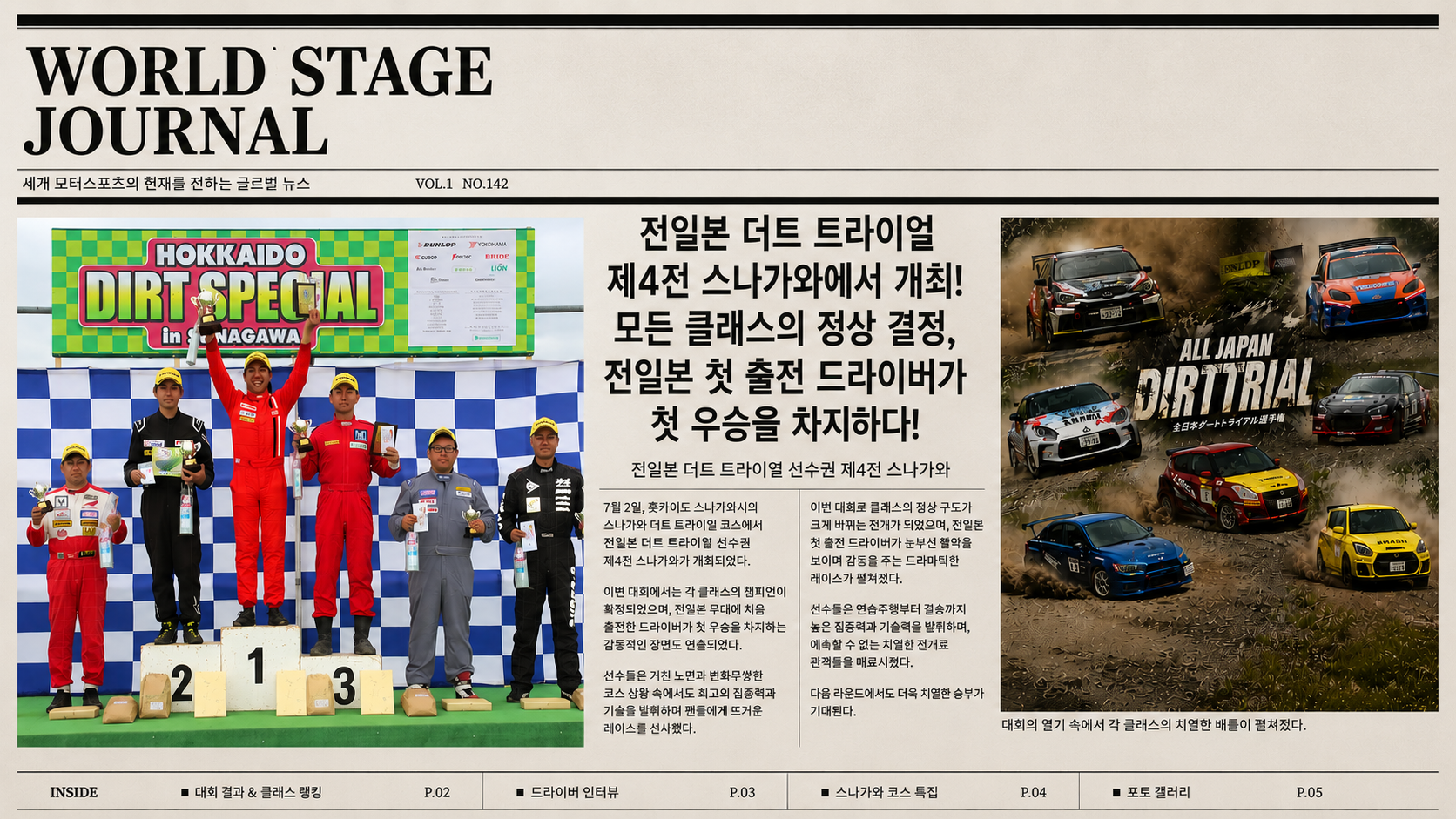
ดิร์ทไทรอัลชิงแชมป์ญี่ปุ่นสนาม 4 ซึนากาวะ — แชมป์แต่ละคลาสชี้ขาด ต่อไปเอบิสุ
การแข่งขันดิร์ทไทรอัลชิงแชมป์ญี่ปุ่นสนามที่ 4 ปี 2026 จัดขึ้นที่ออโตสปอร์ตแลนด์ซึนากาวะในฮอกไกโด เมื…

เดวิด กราเวล คว้า $300,000 — รางวัลใหญ่ที่สุดในประวัติศาสตร์ World of Outlaws ที่ Huset's Speedway
ในคืนวันที่ 20 มิถุนายน 2026 ที่ Huset's Speedway เมืองแบรนดอน รัฐเซาท์ดาโกต้า เดวิด กราเวล จากคอนเน…

Ben Schmidt คว้าชัยอันดับ 30 ในอาชีพที่ Plymouth — ฝูงชนสถิติในประวัติศาสตร์ 76 ปีของสนาม
FOUNDING READER
This journal exists because 100 people believed in it before the world did.
Seat #001 could be yours.