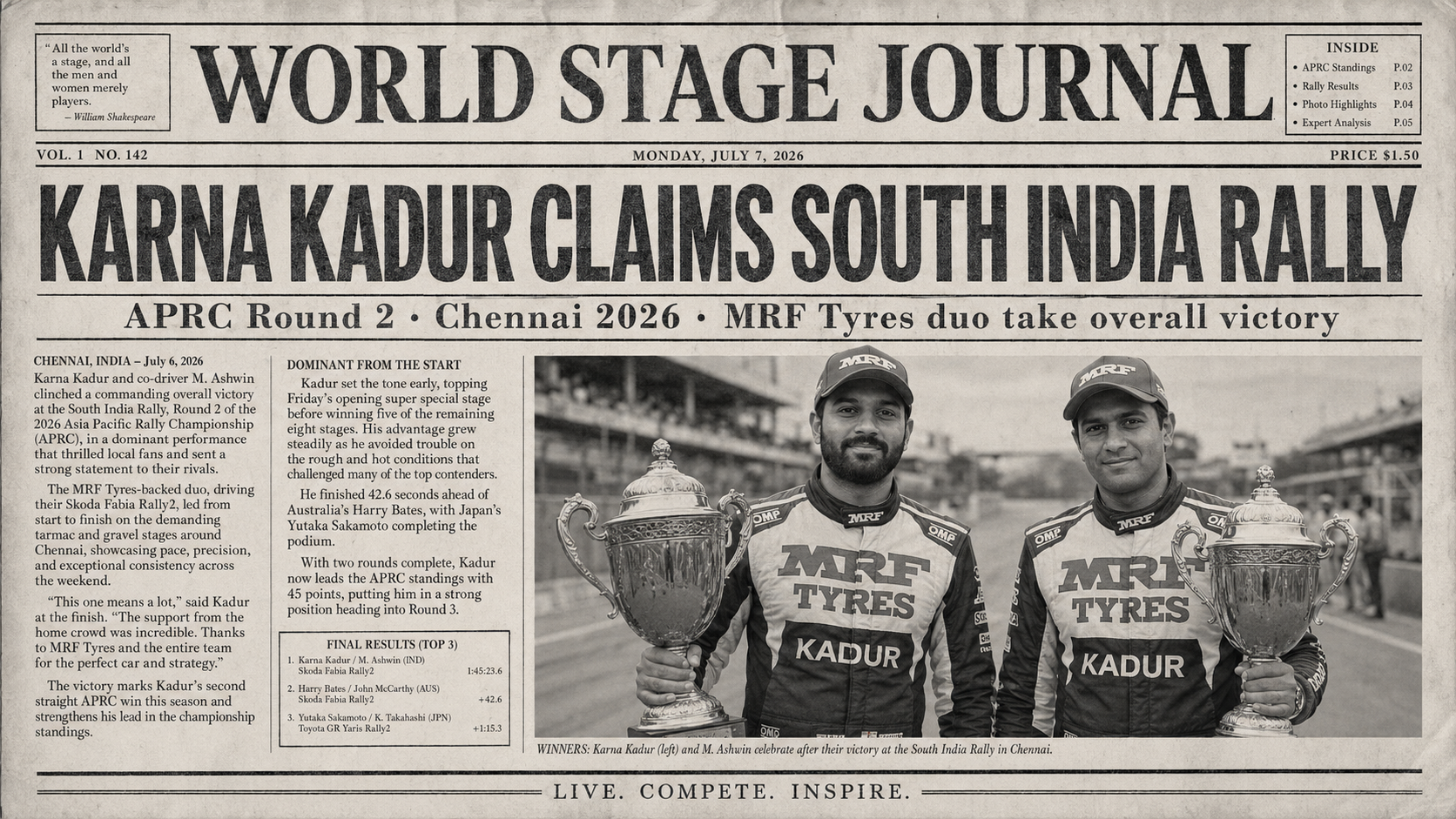
APRC 2. Ayak — Kadur, Gill'in Yarışı Bırakmasından Yararlanarak Chennai Sıcağında 49. South India Rally Zaferini Aldı
World Stage Journal
Karna Kadur ve Kumar Ramaswamy turbo arızasını aşarak Madras'ta APRC ve INRC çiftini kazandı
The 49th South India Rally, held April 17–19 at Madras International Circuit on the outskirts of Chennai, served as both Round 2 of the FIA Asia-Pacific Rally Championship and Round 1 of the Indian National Rally Championship. India's Karna Kadur survived a sudden turbo power loss on the final day to take victory — aided by the retirement of three-time APRC champion Gaurav Gill.
The South India Rally is one of the oldest events on the Asia-Pacific rally calendar. The 49th edition used a mixed gravel and tarmac route around the Madras International Circuit, a modern motorsport facility on the outskirts of Chennai. April in southern India means temperatures above 35 degrees Celsius — demands on cooling systems and tyres that have no equivalent in any rally in the northern hemisphere.
Kadur's turbo lost power mid-way through the second special stage of the final day, costing him nearly a minute and seemingly ending any hope of victory. But in the same stage, championship leader Gaurav Gill — a three-time APRC champion — was stopped by his own mechanical problem and retired from the lead. 'Honestly, I thought it was over,' Kadur said at the finish. 'When the turbo went, my mind went blank.'
Jeet Jabhakh and co-driver Musa Sherif finished second. Third place went to Spain's Edgar Vigo Lopez and Fatima Ameneiro Teijeiro — a touring crew who had travelled to Asia and ended up on the podium in an unexpected result that drew attention on social media.
The victory was the historic first APRC win for Arka Motorsports, Kadur's Indian team. The double-title format — combining APRC and INRC in a single event — reflects how India's motorsport scene is progressively aligning with international standards. Gill's response in the next round will be watched closely.
This column space is a paid placement for sponsor companies. Exposure across all WSJ articles, distributed in 23 languages worldwide.
Inquire About Placement →Share this article
Comments
0Related Articles
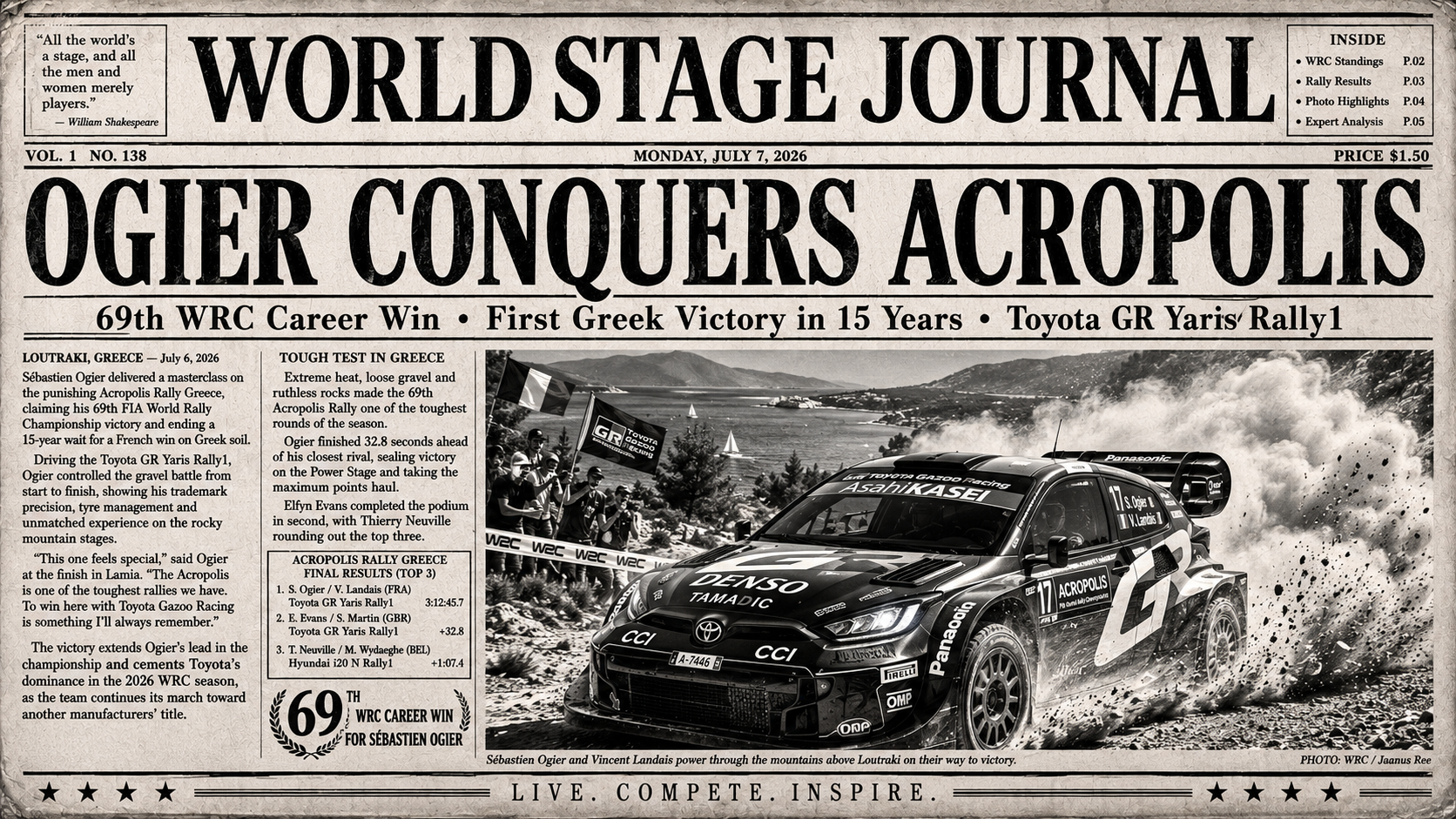
Ogier Akropolis'i Kazandı — WRC Kariyer 69. Galibiyeti, 15 Yılda İlk Yunan Zaferi
Sébastien Ogier, Toyota GR Yaris Rally1 ile 25–28 Haziran'da Yunanistan'ın Loutraki kentinde düzenle…
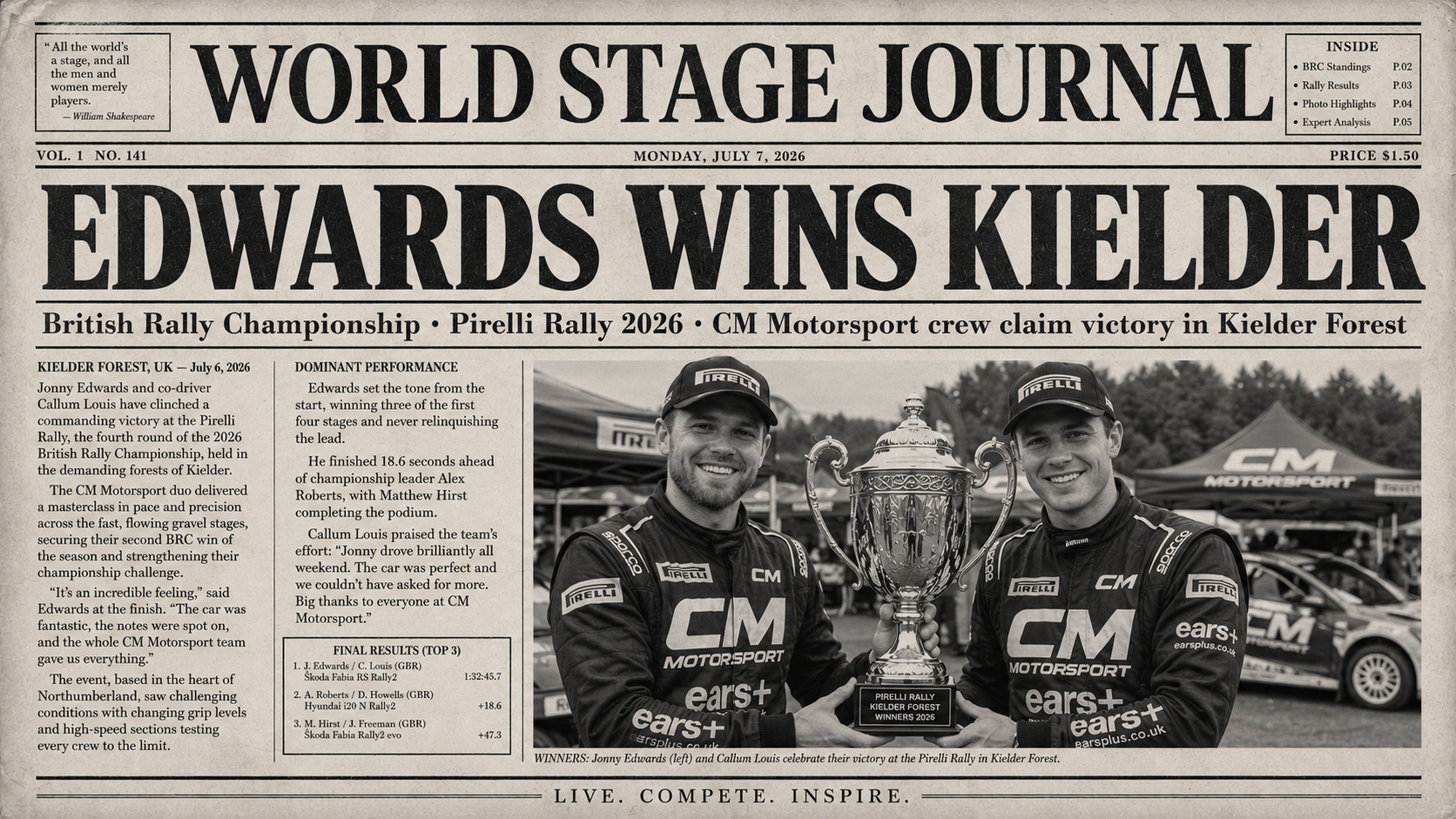
BRC Pirelli Rallisi — McRae Cumbrian Ormanındaki Dezavantajı Tersine Çevirerek İngiliz Şampiyonasının Başına Geçti
Round 3 of the 2026 British Rally Championship, the Pirelli Rally, was held at Kielder Forest, Cumbr…
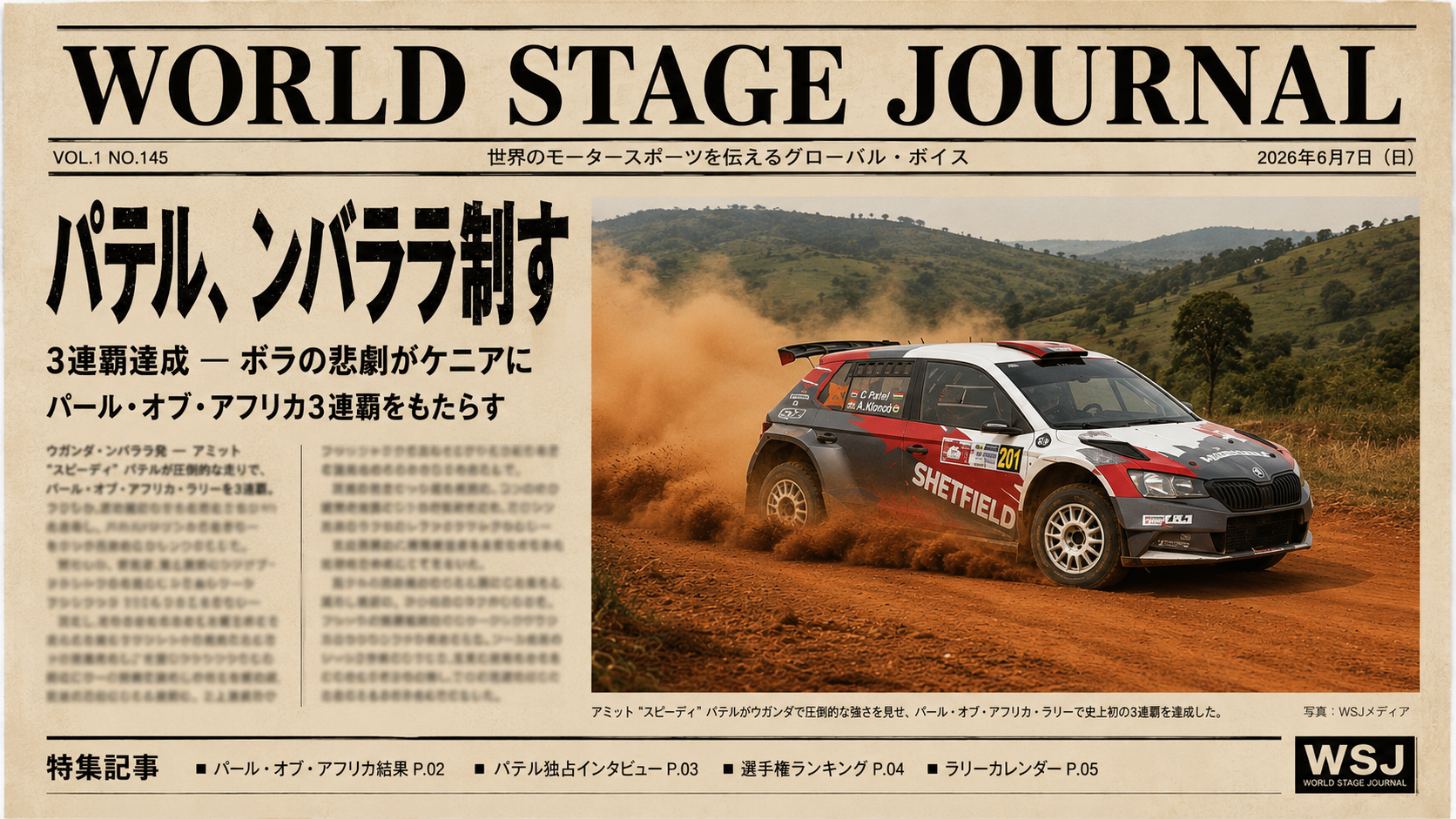
ARC 2. Ayak Pearl of Africa Uganda Rallisi — Patel Üst Üste 3. Galibiyetini Aldı, Tanzanya'nın Tarihi NRC Başarısı
FOUNDING READER
This journal exists because 100 people believed in it before the world did.
Seat #001 could be yours.