Al-Attiyah Claims Record Ninth Oman Victory Despite Three Punctures | World Stage Journal
RALLY🇴🇲2026-01-24
Al-Attiyah Claims Record Ninth Oman Victory Despite Three Punctures
World Stage Journal
2026 Oman International Rally, Sohar, January 22–24: MERC career win 92 for the Qatari champion in a Skoda Fabia RS Rally2, co-driven by Spain's Candido Carrera
Nasser Al-Attiyah and Candido Carrera won the 2026 Oman International Rally, the opening round of the Middle East Rally Championship, held in the port city of Sohar from January 22 to 24. Despite suffering three punctures, the Qatari-Spanish pairing in a Skoda Fabia RS Rally2 finished 2 minutes 8.8 seconds ahead of Omani home driver Abdullah Al-Rawahi. The victory was Al-Attiyah's ninth in Oman — a new all-time record for the event — and MERC career win number 92.
Three punctures. For most drivers, that spells the end of a victory charge. Not for Nasser Al-Attiyah. On the roads around Sohar, the Qatari champion absorbed each blow, maintained his rhythm, and ultimately finished 2 minutes 8.8 seconds clear of Omani home driver Abdullah Al-Rawahi in a Skoda Fabia RS Rally2.
A ninth victory in Oman — a number no one else in the history of the event has reached. The win was also MERC career win number 92 for the Qatar-born champion, adding another chapter to a record that belongs to him alone.
SUBSCRIBER EXCLUSIVE
Subscriber Only: Deep Dive
■ Sohar: The Port City That Sets the Stage
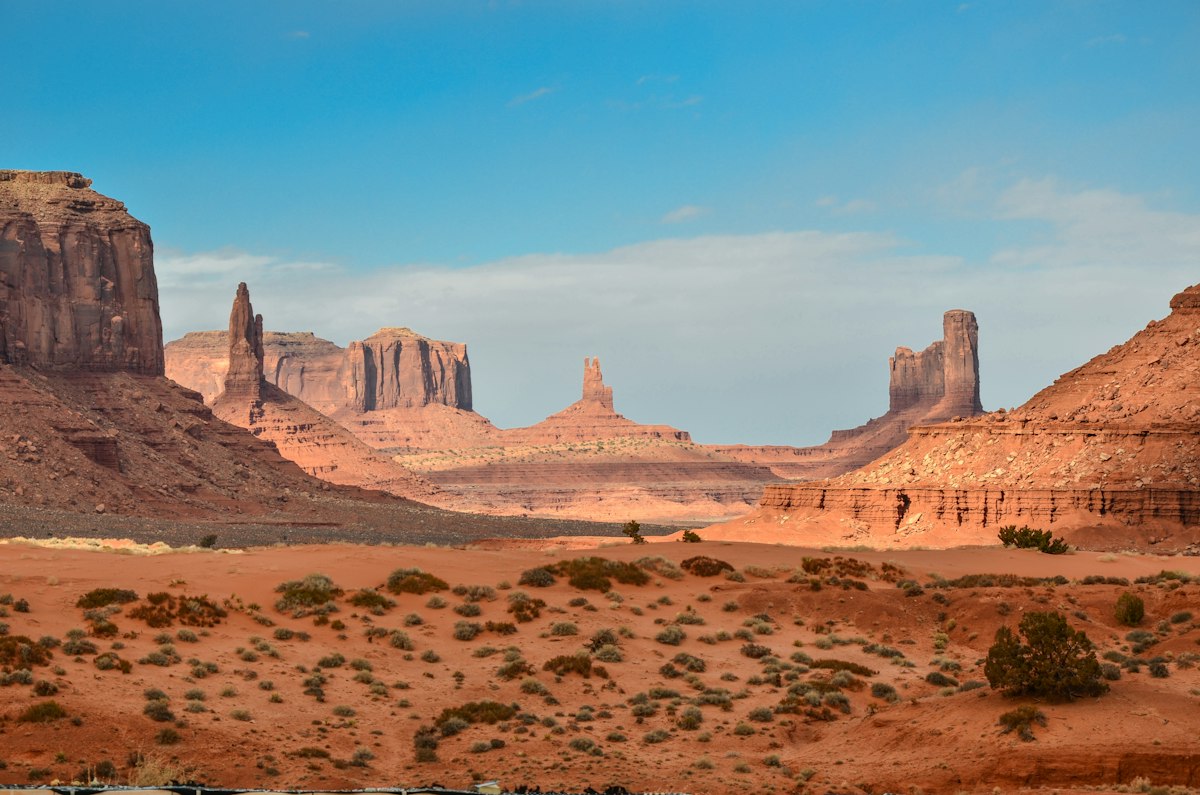
Sohar is a port city on the northern coast of Oman, situated roughly 200 kilometres south of the border with the United Arab Emirates near the base of the Musandam Peninsula. It sits within reach of the Strait of Hormuz, with Fujairah, UAE, visible across the water on a clear day. Historically, Sohar was one of the most important maritime trading hubs in the Arab world, and legend holds it as the birthplace of Sinbad the Sailor from the Arabian Nights. In the modern era, the city has developed into an industrial and petrochemical centre, one of the pillars of Oman's policy of economic diversification beyond oil.
The rally stages unfold across the mixed desert and mountain terrain surrounding the city. Hard limestone bedrock overlaid with loose sand, dust-choked sections that strip away visibility, and jagged rock edges protruding from the surface — this combination places extraordinary stress on tyres. The three punctures Al-Attiyah suffered were not a matter of bad luck. The roads around Sohar rank among the most demanding tyre environments in international rallying, and even the reinforced sidewalls of a Rally2 specification tyre offer only limited protection against the limestone edges that characterise the area.
Sponsored ColumnDM11 Holdings
This column space is a paid placement for sponsor companies. Exposure across all WSJ articles, distributed in 20 languages worldwide.
■ Three Punctures: What Happened and How He Responded
The official results did not specify the precise stages at which each puncture occurred, but reports from the event indicate that the damage was concentrated in the mid-to-late mountain sections of the itinerary, where the road surface is most aggressive.
In conventional rally strategy, a single puncture forces a driver to absorb a time penalty for tyre change and recalibrate their pace. A second puncture in the same event is close to catastrophic. A third is, for most competitors, the point at which a podium finish becomes an achievement in itself. Al-Attiyah and co-driver Candido Carrera treated each puncture as a problem to be managed rather than a crisis to be survived. Tyre change times were minimised, pace was controlled with precision, and the remaining tyres were managed with a discipline that reflects years of experience in desert endurance events.
The ultimate margin of 2 minutes 8.8 seconds over second place is the most telling detail. Three punctures and still more than two minutes ahead — the gap points not just to resilience but to a speed advantage so large that even significant mechanical adversity could not erase it. That capability was built in the Dakar Rally, where managing damage over thousands of kilometres is a fundamental skill, and it transfers directly to the shorter but equally punishing roads of the MERC calendar.
■ Al-Attiyah's Career: Dakar, MERC, and the Olympic Podium
Nasser Al-Attiyah was born in 1970 in Doha, Qatar. His career in competitive sport spans not one discipline but two at the highest international level — a combination that has no close parallel in modern athletics.
In the Dakar Rally, he has won five times overall. His first title came in 2011 in a Volkswagen Race Touareg, followed by victories in 2015, 2019, 2022, and 2023, the last four with Toyota. The back-to-back wins of 2022 and 2023 established him as the definitive figure of the current Dakar era.
In the MERC, today's victory brings his career total to 92 wins. Beyond rallying, Al-Attiyah is a five-time Olympian in trap shooting, winning a bronze medal at London 2012. The combination of top-level rally driving and Olympic competition is without parallel in world sport.
■ How Qatar Became a Rally Power
Qatar has a population of approximately three million and a land area comparable to a mid-sized Japanese prefecture. The QMMF has treated motorsport as a tool of national cultural diplomacy, providing institutional support at a level most rally drivers cannot match through private sponsorship alone. Desert terrain around Doha replicates the surfaces of Dakar and the MERC calendar. And the weight of representing a nation — a factor that underpins Qatar's strategy across multiple sports — translates into sustained competitive motivation.
■ The Structure of MERC: Dominance and the Question of Succession
The Middle East Rally Championship encompasses national rallies across Bahrain, Jordan, Lebanon, Oman, Qatar, and the UAE. The structural challenge is that its top category is effectively organised around one driver. Ninety-two career wins do not occur in a competitive championship — they occur where one competitor has, for sustained periods, been in a class apart. The Oman margin of 2 minutes 8.8 seconds underlines this. Entry costs remain high across the region, the junior pathway is thin, and the number of drivers capable of challenging at Rally2 level internationally is very small. When Al-Attiyah eventually steps back, the championship will face a succession problem for which it has not yet prepared.
Rally 49 ya South India, eyaalindirwa April 17–19 e Madras International Circuit okwoluganda lwa Che…