Electric Motorsport in 2026 — Formula E, Hydrogen Off-Road and Rallycross: A Status Report
Formula E runs the last GEN3 Evo season before GEN4, Extreme E has given way to hydrogen-powered Extreme H, and rallycross's top class is going back to combustion engines
Electric motorsport is not moving in a single direction in 2026. Formula E is running its largest calendar yet and preparing a much more powerful car, off-road racing has moved from batteries to hydrogen fuel cells, and rallycross is returning its top class to combustion engines. WSJ takes stock of what the series and the FIA have announced.
Formula E's Season 12, covering 2025-26, was announced in June 2025 as its most expansive yet: 18 races across 12 cities. It opened in São Paulo on 6 December 2025 and added new venues at the Miami International Autodrome and at Jarama near Madrid. Berlin, Shanghai and Tokyo are among the cities hosting two races on one weekend; Formula E first raced in Tokyo in 2024, its first event in Japan. The season is scheduled to finish with two races at London's ExCeL on 15-16 August 2026.
That London finale closes the GEN3 Evo era. The GEN3 Evo, introduced for the 2024-25 season, produces up to 350 kW in qualifying and in Attack Mode and 300 kW in race mode, and its all-wheel drive is used only at race starts, in the qualifying duels and in Attack Mode. Its successor, GEN4, is set to debut in Season 13 (2026-27). According to the FIA, it will have 450 kW of peak race power, 600 kW in Attack Mode and all-wheel drive in every phase of the race.
Off-road racing has taken a different route. Extreme E, which from 2021 raced electric SUVs in remote locations with mixed-gender driver pairings, has been replaced by Extreme H. Its car, the Spark Pioneer 25, pairs a 75 kW hydrogen fuel cell from Symbio with a battery. The first FIA Extreme H World Cup, held at Qiddiya City in Saudi Arabia in 2025, was won by Kevin Hansen and Molly Taylor of Jameel Motorsport.
Rallycross shows that the direction can also reverse. The FIA World Rallycross Championship moved its top class to electric RX1e cars in 2022. In 2025 the FIA announced that, from 2026, the top category would revert to the FIA European Rallycross Championship with combustion engines only, subject to World Motor Sport Council approval, and that it aims to bring back a World Rallycross Championship in 2028 under new technical rules.
For Japan's dirt trial — short timed runs on unsealed courses — the instant torque of an electric motor is sometimes discussed as a good fit. An electric class would still have to answer practical questions, such as how cars are charged at temporary venues and how high-voltage systems are protected from mud and water. Taken together, 2026 suggests that each discipline is choosing the power source that suits it, rather than following a single path.
This column space is a paid placement for sponsor companies. Exposure across all World Stage Journal articles, distributed in 23 languages worldwide.
Inquire About Placement →Share this article
Comments
0Related Articles

The Shavings Become Incense — 225 Years of a Craft, 80 of Them in One Family
Channapatna, in Karnataka in southern India, is known as the "Toy Town of India", according to the w…
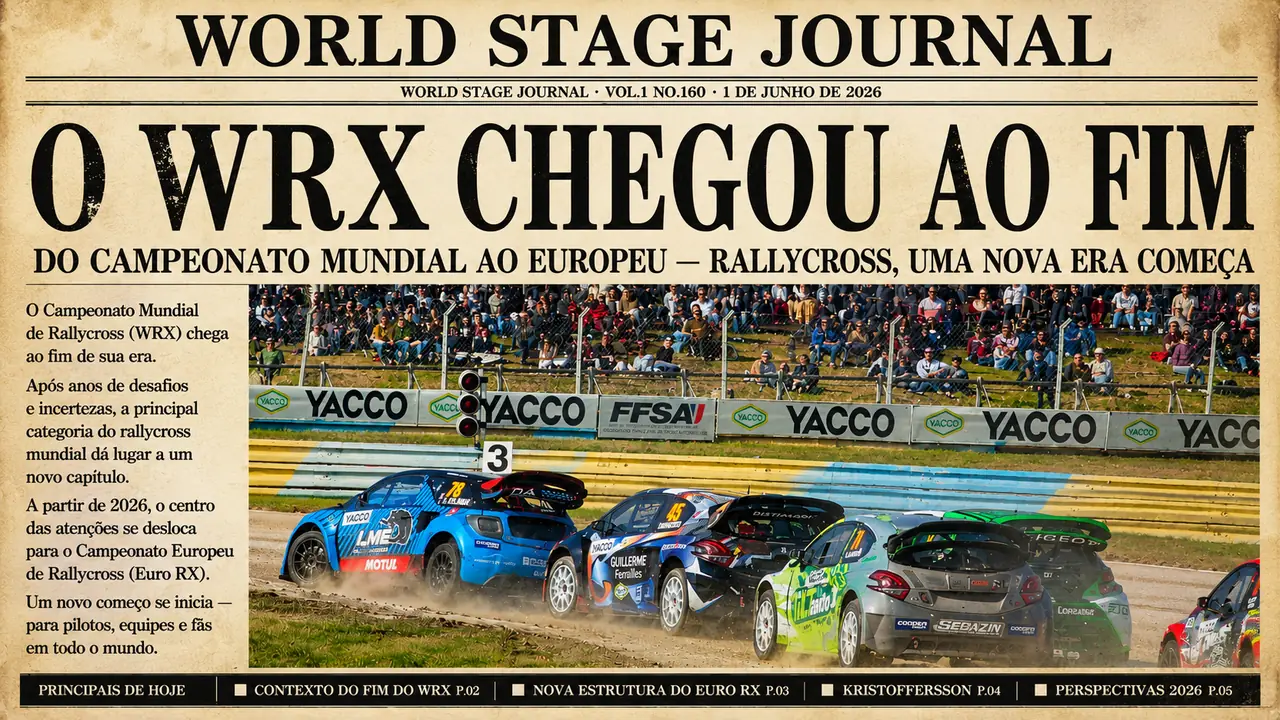
The End of WRX — World Rallycross Downsizes to Euro RX, a New Era Begins
The FIA World Rallycross Championship concluded after the 2025 season, and in 2026 the long-running …
FOUNDING READER
This journal exists because 100 people believed in it before the world did.
Seat #001 could be yours.